Bread is simplicity. Bread is flour, water, a bit of fat, a sprinkle of salt, some honey and yeast. Bread is warmth, freshness, a new beginning.
And yet when you go to the grocery store to pick up a loaf of bread or a package of English Muffins, you find that simplicity has been destroyed by a dizzying array of artificial ingredients. I don't need to list out the preservatives, the food colorings, the hydrogenated oils...because at this point, we all know what goes into most packaged foods and many of us are deeply dissatisfied.
As a baker, I've moved away from all boxed cake mixes, cans of frosting, loaves of "abnormally soft" sandwich bread. I bake our own whole wheat loaves, which we use at most every meal (toast in the morning, sandwich at lunch), and I yust can't get over my amazement at throwing a few simple ingredients together to produce a warm, crumbly loaf.
Even if you don't plan to become an avid baker, I would encourage you to take a Saturday or Sunday afternoon to make a simple loaf of bread. Baking is an age-old human craft, at one time passed down through generations, and there is something elemental about returning to the practice.
Click on the link below to read about making English Muffins...I promise, they're so much easier than you think and nothing tastes better after waking up from a good night's sleep.
And yet when you go to the grocery store to pick up a loaf of bread or a package of English Muffins, you find that simplicity has been destroyed by a dizzying array of artificial ingredients. I don't need to list out the preservatives, the food colorings, the hydrogenated oils...because at this point, we all know what goes into most packaged foods and many of us are deeply dissatisfied.
As a baker, I've moved away from all boxed cake mixes, cans of frosting, loaves of "abnormally soft" sandwich bread. I bake our own whole wheat loaves, which we use at most every meal (toast in the morning, sandwich at lunch), and I yust can't get over my amazement at throwing a few simple ingredients together to produce a warm, crumbly loaf.
Even if you don't plan to become an avid baker, I would encourage you to take a Saturday or Sunday afternoon to make a simple loaf of bread. Baking is an age-old human craft, at one time passed down through generations, and there is something elemental about returning to the practice.
Click on the link below to read about making English Muffins...I promise, they're so much easier than you think and nothing tastes better after waking up from a good night's sleep.

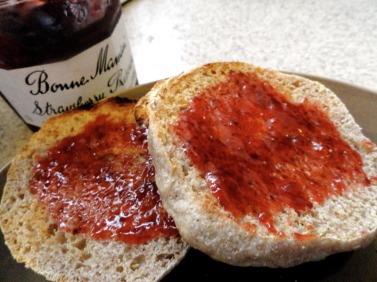
English muffins. Those flat and chewy rolls with just the right amount of air pockets to hold melted butter or apricot jam. Sitting next to a cup of tea, an English Muffin just might be my favorite breakfast meal. For the past several months, I've avoided buying the commercial varieties of English Muffins due to their high levels of processed and artificial ingredients. Instead, I've been purchasing some delicious, albeit expensive, sprouted grain muffins from Whole Foods.
After chatting with one of my friends about the need of a good English Muffin recipe, I set to work, and on my second try found a muffin worth sharing.
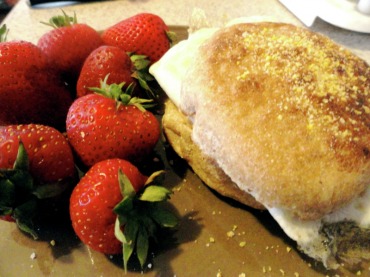
These Whole Wheat English Muffins are adapted from a recipe by Peter Reinhart, a bread-baking god that any baker would be proud to work with. The instructions he listed are accurate and comprehensive, which made this recipe a delight to work with. If you want a more traditional English muffin, simply substitute one cup of whole wheat flour with bread flour. I hope that you enjoy baking these as much as I do. When you pull your baking tray out of your oven, allow them to cool for 30-60 minutes, and then sit down to a cup of coffee and a perfectly toasted English Muffin. You might just float to heaven.
After chatting with one of my friends about the need of a good English Muffin recipe, I set to work, and on my second try found a muffin worth sharing.
These Whole Wheat English Muffins are adapted from a recipe by Peter Reinhart, a bread-baking god that any baker would be proud to work with. The instructions he listed are accurate and comprehensive, which made this recipe a delight to work with. If you want a more traditional English muffin, simply substitute one cup of whole wheat flour with bread flour. I hope that you enjoy baking these as much as I do. When you pull your baking tray out of your oven, allow them to cool for 30-60 minutes, and then sit down to a cup of coffee and a perfectly toasted English Muffin. You might just float to heaven.
Whole Wheat English Muffins
1 ¼ cups unbleached bread flour
1 cup whole wheat flour
½ tablespoon granulated sugar
¾ teaspoon salt
1¼ teaspoons instant yeast
1 tablespoon unsalted butter, at room temperature
¾ to 1 cup milk, at room temperature
Cornmeal for dusting
1. Stir together the flour, sugar, salt, and yeast in a mixing bowl (or in the bowl of an electric mixer). Stir in (or mix in on low speed with the paddle attachment) the butter and ¾ cup milk until the ingredients form a ball. If there is still loose flour in the bowl, dribble in some of the remaining ¼ cup milk. The dough should be soft and pliable, not stiff.
2. Sprinkle flour on the counter, transfer the dough to the counter, and begin kneading (or mixing on medium speed with the dough hook). Knead the dough for about 10 minutes (or mix for about 8 minutes), sprinkling in more flour if needed to make a tacky, but not sticky, dough. Lightly oil a large bowl and transfer the dough to the bowl, rolling it to coat it with oil. Cover the bowl with plastic wrap.
3. Allow to rise at room temperature for 60 to 90 minutes, or until the dough doubles in size.
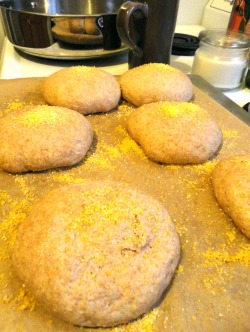
4. Transfer the dough to a lightly floured surface. Divide the dough into 6 equal pieces of 3 ounces each. Shape each piece into a round roll. Line a cookie sheet with baking parchment, mist lightly with spray oil, and dust with cornmeal. Transfer the balls of dough to the sheet pan, spacing them about 3 inches apart. Mist them lightly with spray oil, sprinkle them loosely with cornmeal, and cover the pan loosely with plastic wrap or a towel.
5. Proof at room temperature for 60 to 90 minutes, or until the pieces nearly double in size and swell both up and out.
6. Heat a skillet or flat griddle to medium (350°F if you have a thermometer setting). Also, preheat the oven to 350°F with the oven rack on the middle shelf.
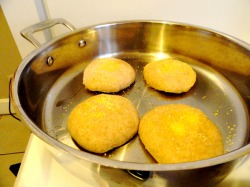
7. Brush the pan or griddle with vegetable oil or mist with spray oil. Uncover the muffin rounds and gently transfer them to the pan, sliding a metal spatula under them and lifting them to the pan. Fill the pan so that the pieces are at least 1 inch apart, not touching. Cover the pieces still on the sheet pan with the plastic wrap or a towel to prevent them from developing a skin. The dough that is being cooked will flatten in the pan and spread slightly, then the pieces will puff somewhat. Cook them for 5 to 8 minutes, or until the bottom of the dough cannot cook any longer without burning. The bottoms should be a rich golden brown; they will brown quickly but will not burn for awhile, so resist the temptation to turn them prematurely or they will fall when you flip them over. Carefully flip the pieces over with the metal spatula and cook on the other side for 5 to 8 minutes in the same manner. Both sides will now be flat. When the dough seems as if it cannot endure any further cooking without burning, transfer the pieces to a sheet pan and place the pan in the oven (don’t wait for the still uncooked pieces, or the ones just out of the pan will cool down and will not respond to the oven stage). Bake for 5 to 8 minutes on the middle shelf in the oven to ensure that the center is baked. Meanwhile, return to the uncooked pieces and cook them, then bake them, as you did the first round.
8. Transfer the baked muffins to a cooling rack and cool for at least 30 minutes before slicing or serving.
(From The Bread Baker’s Apprentice by Peter Reinhart)
1 ¼ cups unbleached bread flour
1 cup whole wheat flour
½ tablespoon granulated sugar
¾ teaspoon salt
1¼ teaspoons instant yeast
1 tablespoon unsalted butter, at room temperature
¾ to 1 cup milk, at room temperature
Cornmeal for dusting
1. Stir together the flour, sugar, salt, and yeast in a mixing bowl (or in the bowl of an electric mixer). Stir in (or mix in on low speed with the paddle attachment) the butter and ¾ cup milk until the ingredients form a ball. If there is still loose flour in the bowl, dribble in some of the remaining ¼ cup milk. The dough should be soft and pliable, not stiff.
2. Sprinkle flour on the counter, transfer the dough to the counter, and begin kneading (or mixing on medium speed with the dough hook). Knead the dough for about 10 minutes (or mix for about 8 minutes), sprinkling in more flour if needed to make a tacky, but not sticky, dough. Lightly oil a large bowl and transfer the dough to the bowl, rolling it to coat it with oil. Cover the bowl with plastic wrap.
3. Allow to rise at room temperature for 60 to 90 minutes, or until the dough doubles in size.
4. Transfer the dough to a lightly floured surface. Divide the dough into 6 equal pieces of 3 ounces each. Shape each piece into a round roll. Line a cookie sheet with baking parchment, mist lightly with spray oil, and dust with cornmeal. Transfer the balls of dough to the sheet pan, spacing them about 3 inches apart. Mist them lightly with spray oil, sprinkle them loosely with cornmeal, and cover the pan loosely with plastic wrap or a towel.
5. Proof at room temperature for 60 to 90 minutes, or until the pieces nearly double in size and swell both up and out.
6. Heat a skillet or flat griddle to medium (350°F if you have a thermometer setting). Also, preheat the oven to 350°F with the oven rack on the middle shelf.
7. Brush the pan or griddle with vegetable oil or mist with spray oil. Uncover the muffin rounds and gently transfer them to the pan, sliding a metal spatula under them and lifting them to the pan. Fill the pan so that the pieces are at least 1 inch apart, not touching. Cover the pieces still on the sheet pan with the plastic wrap or a towel to prevent them from developing a skin. The dough that is being cooked will flatten in the pan and spread slightly, then the pieces will puff somewhat. Cook them for 5 to 8 minutes, or until the bottom of the dough cannot cook any longer without burning. The bottoms should be a rich golden brown; they will brown quickly but will not burn for awhile, so resist the temptation to turn them prematurely or they will fall when you flip them over. Carefully flip the pieces over with the metal spatula and cook on the other side for 5 to 8 minutes in the same manner. Both sides will now be flat. When the dough seems as if it cannot endure any further cooking without burning, transfer the pieces to a sheet pan and place the pan in the oven (don’t wait for the still uncooked pieces, or the ones just out of the pan will cool down and will not respond to the oven stage). Bake for 5 to 8 minutes on the middle shelf in the oven to ensure that the center is baked. Meanwhile, return to the uncooked pieces and cook them, then bake them, as you did the first round.
8. Transfer the baked muffins to a cooling rack and cool for at least 30 minutes before slicing or serving.
(From The Bread Baker’s Apprentice by Peter Reinhart)

 RSS Feed

