Bell Jar and Girl, Interrupted 09/07/2011
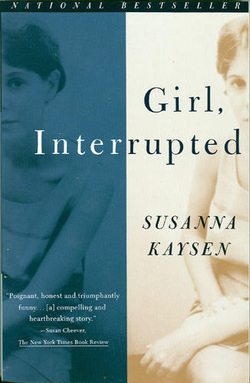
I sat in my therapist’s office yesterday and talked about Sylvia and Susanna. Both so brilliant yet also deemed insane (for at least part of their lives). “I wanted to join them,” I explained. “Sit in a room and let the weight of those unanswerable questions crush me till I couldn’t function like a normal person anymore.” Mandy nodded with sympathy, and I wrung my hands. How many people find an insane asylum appealing? Am I already walking down that well trod path of female instability? Girl, Interrupted and The Bell Jar invite the reader into the dizzying world of mental illness. Although written thirty years apart, the events in these two books are separated by only fifteen years. Both girls are institutionalized in McLean Hospital and treated by the same compassionate female therapist—reading them in succession allowed a deeper glimpse into the psychiatric world in the 20th century. As a 16 year old girl, I first read Sylvia Plath’s The Bell Jar with rapt attention. As I watched the vivacious and talented Esther sink into depression, I stood aghast. Could it really happen so quickly, so easily? I devoured the book on a cold Colorado afternoon, and ate dinner, thankful I still knew how to lift a spoon to my mouth. The second time around, I was struck by Plath’s artfully playful prose. The normalcy of teenage life is wedded with insanity and deep depression, and Plath’s language mirrors the seemingly unlikely partnership. With descriptions like, “intestinal tunnels,” “barbed-wire letters,” and “gleaming tombstone teeth,” Plath draws the reader into a twisted yet brilliant world. The prose pops off the page, leaving young writers like me yearning for a bit more insanity if it produces a novel like this. In contrast, Susanna Kaysen’s Girl, Interrupted is written as a memoir, and her painfully honest account of her almost two years at McLean reads more somber than Plath’s poetic and playful prose. Her memoir is broken into small vignettes of two to three pages that capture a moment or a thought related to her mental breakdown and recovery. Interspersed are actual copies of her medical records—evaluations, intake forms, medication charts—which give her words even more weight. Unlike in The Bell Jar, where Esther fills and spills off the main stage, this memoir captures much more than Susanna Kaysen. The girls she meets and befriends at McLean become characters I appreciated in all their tics and compulsions. I left the book knowing Susanna Kaysen and shall I dare say it, her beautiful and broken friends. Kaysen’s ability to see outside of herself, to capture these women at the peak of their insanity, hints at her eventual recovery. If you’re interested in mental health, or if you’ve ever been a teenage girl, these two books are worth reading for their insight into the fine line between insanity and normalcy. Artfully written, The Bell Jar captures the mind of a literary genius, a poet we lost too soon. And with great compassion, Girl, Interrupted offers a true tale of recovery and hope—it reminds me that many great people have walked in and out of those barred doors. 5 Comments Fraud 08/19/2010

Anita Brookner is an author whose eloquent prose summons you to abandon your long to-do list, pour yourself a cup of tea, and curl up with a novel in an antique arm chair. Her writing demonstrates a conscious attention. Each phrase and paragraph is purposeful and restrained; Not in any way superfluous, her writing brims with depth and complexity. The protagonists in many of Brookner's novels are women who have been ignored or misunderstood. They live relatively narrow lives. Although well-educated and financially stable, these woman are often unattractive, or at least past their sexual prime, and struggle to find their place in the world. Anna in Fraud fits this typecast well. When the book opens, the reader is introduced to Anna through the tinge of a police investigation. Upon her missing several appointments, the law has been summoned to determine where Anna might have gone. In the minds of her acquaintances, there can be no possible explanation for Anna's disappearance other than a kidnapping or violent crime. After all Anna is in her fifties, unmarried, and lives a simple, selfless life in a small flat in London. To the outside world, she sacrificed her future to care for her invalid mother, a beautiful and selfish woman who entangled herself in an unhealthy affair. With the death of her mother, Anna found herself old and alone, with little prospect for intellectual or emotional growth. At least, this is what the outside world sees. But the wonder of Anita Brookner is her ability to move a plot forward through the inner workings of her characters. Dialogue or events do not move the reader forward in her novels, but instead a rich inner life is dissected and presented for our perusal. Although it may appear on the surface that Anna lives a dull life, Brookner breathes vitality into her protagonist by revealing to us her thoughts and past actions. As a contrast to the selfless and demure Anna, Brookner alternates perspectives to a more vivacious woman, Miss Marsh. Miss Marsh serves as an apt foil to Anna, both needing her sympathy as an older woman and despising Anna's decisions to serve her mother and to live a quiet life. Much judgment and harshness flows from her mouth, but as the novel unfolds we learn how incorrect her initial assumptions were. While the world might perceive Anna as a staid virgin, the surface doesn't begin to reveal the depths inside each human soul. Anna turns out to be a far more complex and daring woman than her social circle imagined. While her mother's illness kept her close for year after year, it is made clear that, "She had escaped from a prison cell and she was determined to never again be imprisoned" (129). The eloquence of Brookner's prose is enough to compel my strong recommendation, but the unique composition of the book, told through the perspective of many different characters with varying intents, seals my approval. Let the Great World Spin 08/10/2010
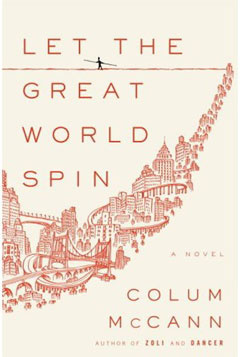
So despite a lack of book reviews in the past few weeks, I have been reading (I have also been moving which is the true cause of my sporadic posting). In times of change and stress, I find that turning to a novel at the end of the day is like salve on an exposed wound. Without it, I feel like my innards will fester, I'll lose perspective, I'll become stuck on my poor, little life. Reading a novel like Colum McCann's Let the Great World Spin was equivalent to the highest quality first aid cream (Neosporin + pain relief). Under the covers, I wrapped my ankle around the other and read, page after page, night after night. We (because Ryan read the book a few days before I did) found a simple satisfaction in McCann's tightly woven plot. We decided on a name for our son too (I like to plan ahead). Colum McCann is a transplant to New York City, and brings a fresh eye to the pulsing, interconnected web of that dynamic place. The story hinges on one true event in the 1970's, a day in which Philippe Petit walked across the Twin Towers on a tight rope, suspended thousands of feet in the air. While such a feet is still fascinating to the contemporary mind, the event serves as a common denominator instead of the main focus. McCann will pan to the acrobat in air but zooms in on the lives of others, of common people who experience the city in a myriad of ways. Two of the central characters are Irish, like Colum. Ciaran is a rather aimless young man, disillusioned by his home and eager for greater connection. His brother, Corrigan, is a monk (more unconventional than most) and a man trying to reconcile his passion for God with his passion for living. Through Corrigan's ministry, Ciaran is introduced to the gritty world of New York hookers, pimps and drugs. The reader is also given an intimate introduction to the women who work the streets, women that are both fragile and indomitable. But this novel refuses to settle. McCann moves the reader from one perspective to the next, shifting his voice as he narrates the thoughts and actions of several different yet somehow connected characters. From a pair of Irish brothers, to an upper-class mother who has lost her son, to a tight rope walker that dared to defy, to a burnt-out whore, McCann moves through these lives with seamless transition. Although the reader may not understand how or if these disparate lives will work to create a whole, McCann inspires enough confidence to compel continued trust...and not only trust, but an intense desire to explore further this mad and inspiring world of city living. Ultimately this novel is about love and loss. This novel is about holding on to those that we love, despite the apparent lack of hope or possible reconciliation. In many ways, this novel speaks to the great loss of 9/11. The beauty and the terror of the towers is eloquently conveyed in the acrobatic act of defiance that captured the imagination and the hearts of many New Yorkers. Even then, the danger and beauty of those imposing architectural feats was apparent, and as Pierre walks and dances across the cable that stretches between them, the contemporary reader feels the current hollowness of the city skyline; there is no escaping the realization that such creative possibility no longer exists. And while McCann does not begin to delve into the layers and layers of terror and loss that occurred on that fateful day, he presents his readers with stories and people that are compelled by love and are often scarred by loss. McCann's first person narration shifts from one character to the next, and for the most part, he succeeds at presenting the reader with genuine human experience (his one downfall is his portrayal of a middle-aged African American hooker, which read hollow to me). But if you are searching for a novel that will stir you, that will encourage you to look at your community with fresh eyes, than I suggest no other novel than McCann's great work. Mating 07/16/2010
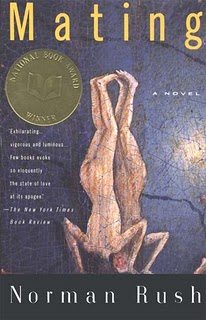
When I read novels and I happen upon concepts or words I’m unfamiliar with, I tend to fold the page down and return to investigate a few hours later, when I have my laptop open before me. But in the case of Mating, by Norman Rush, I found myself turning down so many pages that I renounced my normal habit and sat my laptop down right beside me. Mating, written in first person narration, is peppered with intellectual dialogues, historical references and phrases from a variety of origins. The plot itself addresses questions that have remained unanswered in the minds of many of the greatest thinkers, questions of love and human relationship and of the patterns that seem to dictate our interactions, regardless of our desire for change. Addressing issues of feminism, socialism, and post-colonial development, Norman Rush leaves almost no stone unturned. The narrator, a somewhat likable graduate student with a wandering thesis, is female, and her attention, despite her aims otherwise, becomes absorbed on creating and sustaining a relationship with an older, more accomplished man. The man, Nelson Denoon, has largely abandoned academic opportunities in the West to fund and create an experimental utopian society run largely by disenfranchised African women. It is this society, Tsau, that serves as the backdrop of Nelson and the narrator’s relationship, a relationship that evolves slowly but soon begins to unravel as Platonic ideas of love and equal partnership begin to dissolve. The reader is presented with two characters that both have aims at finding and creating an ideal. While the narrator is fixated on the possibility of an equal soul-mate relationship, her partner is absorbed with the task of creating a utopian society that corrects many of the ills of ages past. In both cases, each present finely articulated and intelligent plans, but reality proves that the world cannot be reduced to thesis statements. Instead, both Nelson and the narrator’s belief systems are complicated and overlap constantly, and while they both purport strong convictions, their lives prove that constant integrity to those ideals is an impossible goal. This novel is not for the light reader. Norman Rush takes you on an exhilarating and confusing ride through the heart of Africa and the still uncharted territory of the human heart. As an examination of two academics, the text is littered with language that requires a solid sense of history and philosophy. But the questions that Rush raises and the images he creates are worth any labor the reader must endure. Delta Wedding 06/29/2010
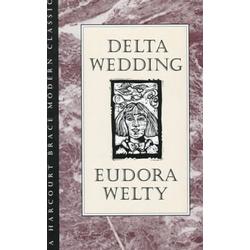
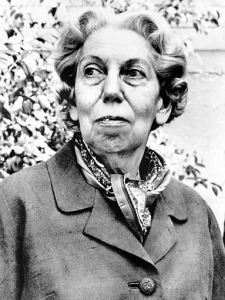
It's June, and as I walk down my street, I'm greeted with blooming peonies and children playing outside. The days are long and languid, and the cool Colorado mountains bring a refreshing briskness to the air each night. Summer, in all its joys, is upon us, and I am basking in the fullness. It should come as no surprise that brides and grooms most often choose the summer months for their nuptials. How can you turn down sunshine and flowers and bright green grass? My two oldest and dearest friends are both getting married this summer, and as I celebrated my own anniversary in May, I feel as if weddings abound. So when I happened upon Delta Wedding at a thrift store, I eagerly snatched it up, ready to delve even further into wedding fervor. I have long admired Eudora Welty; her sharp wit and vivid depiction of the South set her apart from many of her contemporaries. As I held Delta Wedding in my hands, I anticipated that this novel would only confirm my already high opinion. In 1946, writing for the New York Times, Charles Poore aptly spoke of Ms. Welty, saying, "here was a new talent, sparkling and deep, combining the sensibility of Virginia Woolf's moody brilliance with an uncommon sense of the American realistic tradition. Miss Welty's stories go deep into the motives and moods and compulsions that move her characters--but you never doubt that they live and have their being not far from the streets of Jackson and the bayous and cotton fields of the Mississippi Delta country or Natchez country." Indeed, Welty does seem to appreciate and emulate Virginia Woolf's vivid unpacking of ordinary life; Welty's prose is full of vivid images, clever banter and a slew of characters that float in and out of the narrative. But instead of musty England, Welty thrives in the deep South. In Delta Wedding, the reader is transported into the Fairchild clan, a long established cotton barony populated with a host of aunts, uncles, siblings and cousins. Set in the 1920's, Delta Wedding presents the Fairchild family in all of their confusion and wonder. Letting the characters speak for themselves and the scenes play out uninterrupted, Eudora Welty plops the reader in the midst of wedding preparations. The various relationships and generations are thrown at the reader from the opening page, and you simply must trust that as you plod along, you will begin to untangle this sparkling web. Because indeed this novel is full of brilliance. The characters are unique and somewhat absurd; they are real people undressed and exposed yet still trying to present themselves in the best possible light. It is evident that the Fairchilds have created their own world, with their own rules and preferences. By the end of the novel, you find yourself wanting to follow the family a bit longer, wanting to delve deeper into the various entanglements and endeavors of some of the more likable characters. The Cement Garden by Ian McEwan 06/25/2010
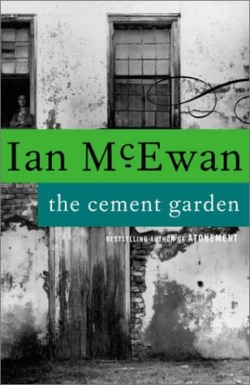
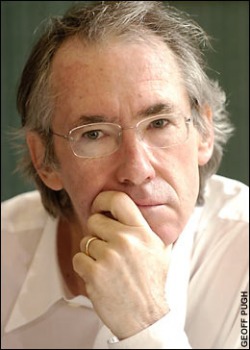
As a blossoming reader and writer, I sat in my 9th grade Reading class utterly enthralled with what lay on my desk. A thin book enveloped with green ferns and the cold stare of a boy man kept me licking my thumb as I turned page after page. Lord of the Flies enraptured our young minds as we confronted our own propensity towards evil, as we explored a world without adult rules or presence. It is one of those books that flash you back to your childhood sense of morality, one of those books that can be credited with unraveling your tightly held beliefs. When I picked up The Cement Garden by Ian McEwen I drew immediate connection to Lord of the Flies. In this compact novel, a family of four children loses both their father and their mother, becoming orphans with the unquestioned desire to remain together, aloof and alone. Sixteen year old Julie becomes the surrogate mother to her siblings, and they navigate through their darkly cloaked world with the twisted yet natural tendencies of human beings. Graphic and often disturbing McEwan spares his readers nothing. The sexual tendencies of young children, often ignored for our own stubborn belief in the non-sexual child, are painted with definite strokes. The protagonist, Jack, is portrayed as a troubled adult male with a tendency towards masturbation and sexual attraction to his sisters. Are there scenes of sexual abuse and incest? Certainly, and yet the reader is led to read them as natural and even innocent explorations. The novel was published in 1978, the first of many for widely hailed Ian McEwan. This novel established his ability to capture the atmospheres of certain moments in the cycle of life. In this novel, McEwan distills childhood: both the enviable innocence of being young and the intense desire to become an adult, a word that bears many true and false associations to a young child’s mind. The book is shocking and filled with morbid scenes, and yet I couldn't stop turning the page. The prose is simple, child-like, but inflected with the metaphors and imagery of a master of the English language. For one who has written a myriad of highly-acclaimed novels, Ian McEwan displays his brilliance from the very beginning of his work. An American Childhood by Annie Dillard 06/13/2010
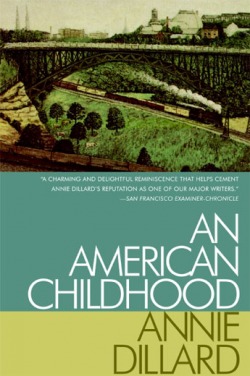
I sat on my couch, with a Pottery Barn pillow in my lap, and I read, rapt, An American Childhood by Annie Dillard. “Can I read you just one more passage?” I would ask Ryan because Dillard’s prose struck me, moved me to the point where I wanted to hear her words roll off of my tongue. Such an experience with an author or a novel is why I read with a voracious intensity. Pulling books from under my bed, from library shelves, from friends’ dusty collections, I hunger to find connection. When it happens, my heart beats harder and my mind struggles to keep my eyes in check, to prevent me from flying through page after page. Steady yourself, I say, take this in slowly, and so I turn back and I leaf through pages I’ve already read, and I revel in the beauty of the written word. An American Childhood is a memoir, an autobiography about Dillard’s childhood in Pittsburg around the 1940’s and 1950’s. Her prose painlessly dissects the struggles and demands of childhood, of growing up. As a young girl, Dillard devours the world around her becoming intrigued and obsessed by varying fascinations such as art and rocks, bugs and literature. She stands amidst a world both beautiful and haunting, taking in the wonder of nature alongside the horror of human behavior. Dillard’s prose captures both the inner and the outer marvels of being alive. She guides the reader through her childhood with the sobering reminder that as one grows older, the ability to appreciate the world diminishes as we become more and more aware of the self. The unconsciousness of childhood allows a girl to throw herself, wildly, into the beating world around her. And so as Dillard recounts her younger days, we feel her longing to return to those selfless, free moments, and we hear in her voice the desire to foster the same unconsciousness that children so naturally possess. I can think of no other way to explain the breathtaking artistry of her writing than to include a short selection of her prose from An American Childhood. I sincerely hope it inspires you to pick up this book or one of her many others. “What does it feel like to be alive? Living, you stand under a waterfall. You leave the sleeping shore deliberately; you shed your dusty clothes, pick your barefoot way over the high, slippery rocks, hold your breath, choose your footing, and step into the waterfall. The hard water pelts your skull, bangs in bits on your shoulders and arms. The strong water dashes down beside you and you feel it along your calves and thighs rising roughly backup, up to the roiling surface, full of bubbles that slide up your skin or break on you at full speed. Can you breathe here? Here where the force is the greatest and only the strength of your neck holds the river out of your face. Yes, you can breathe even here. You could learn to live like this. And you can, if you concentrate, even look out at the peaceful far bank where you try to raise your arms. What a racket in your ears, what a scattershot pummeling! It is time pounding at you, time. Knowing you are alive is watching on every side your generation's short time falling away as fast as rivers drop through air, and feeling it hit." So Long, See You Tomorrow by William Maxwell 06/09/2010
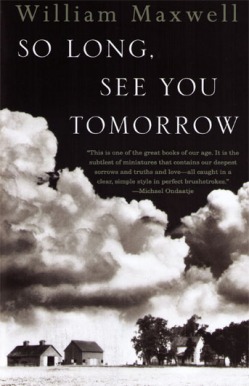
Conversations between readers and authors occur each time someone opens a novel or filters through a piece of nonfiction. Whether or not we are cognizant of the interaction, it exists in the moments that we chuckle at a familiar scenario or question the validity of an author’s claim. I appreciate when an author addresses me in his or her work because it reminds of this ever-present conversation. It reminds me, as a writer, that my audience must always be in the forefront of my mind. In William Maxwell’s compact novel, So Long, See You Tomorrow, the separate yet touching realms of the reader and the writer are recognized. Maxwell will interject his narrative with a quick address such as, “The reader will also have to do a certain amount of imagining…” (p. 56). And isn’t that the aim of a good novel? To encourage the reader to expand her own imagination, to create a world with the help of a literary friend? The Village Voice wrote that, “William Maxwell is one of the past half-century’s unmistakably great novelists.” and after completing this small novel, my admiration nearly matches that of the Village Voice. So Long, See You Tomorrow is a classic American novel about childhood and loss, about regret and remembrance. The author recounts his vulnerable friendship with a troubled farm boy, Cletus. Both boys must navigate through loss and confusion. The narrator struggles with the death of his mother, while Cletus witnesses the unraveling of his family and his father. Both boys find themselves placed in situations that they have no control over, a state that almost all children and adults have experienced. But the heart of the novel lies in the relationship between Cletus’ father, Clarence and a neighboring farmer, Lloyd Wilson. On a cold morning, before daybreak, a shot rings out in the countryside, and Wilson is found dead, shot by his former best friend, Clarence. In a smaller act of betrayal, the narrator abandons his friendship with Cletus due to the murder of Lloyd Wilson, and this act haunts him throughout his adolescence and adulthood. In an effort to explore his own regret, the narrator delves into the past and recounts the lives and events that led to this dramatic display of violence. Maxwell paints a haunting pastoral picture and imparts vitality to characters that could easily have fallen flat. Through concise yet stirring imagery, Maxwell exposes the reality of rural life and depicts the heartbreaking emotions and consequences of human relationships. On one hand a coming-of-age story, on the other hand a powerful sketch of human weakness, So Long, See You Tomorrow is a small novel that stays with the reader long after the final page. Giant by Edna Ferber 06/05/2010
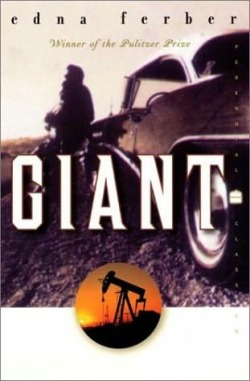
I grew up in Houston, Texas. In the fourth grade, my peers and I would sit around our teacher and read from our Texas History Textbooks. Unlike most states, Texas created a mandatory state history course for all youth during their elementary and secondary years. As you might imagine, the stories of Davy Crockett and Santa Anna and the Alamo were enthralling to our impressionable minds. We were Texans, and we had a proud history behind us and before us. When I moved to Colorado, I was quick to inform my new classmates that their smaller, less significant state was once a part of my more superior home, Texas. Of course, in a matter of minutes, I found myself biting my tongue as middle school girls and boys jeered at my haughty attitude. “If you like it so much, then why did you leave?” they asked, and then informed me that Colorado would be a whole lot happier if all these Texas transplants would just go on home. Well after living in Colorado for the past ten years, I am finally following their advice. As of August, Ryan and I will be citizens of Texas, and I will be living in the state capital; the Texas flag will be waving proudly above me while I’ll be standing there, scared to death. Because after being away from that expansive state for so many years, you begin to lose touch with the Texas mentality. In fact, you begin to despise it. And so, I have been slowly introducing myself back to Texas by reading various Texas novels and movies. Giant by Edna Ferber is an entertaining and informative read; a book that made me smile and delight in the thought of spending an evening curled up in my cool Colorado apartment. Written in the 1950’s, Giant captures the upper echelon of Texas in the first part of the 20th century. The protagonist, Leslie, comes from a well-to-do East Coast family; she marries a powerful cattleman named “Bick” Benedict and moves from the comfort of her family’s home to the harsh yet beautiful Texas landscape. As a naïve young woman, she is both shocked and swept under by the reality of Texas life. She harshly criticizes the inhumane treatment of Mexican workers and she scoffs at the high opinion her new neighbors have of themselves and their state. But in time, she finds that the wide-open ranges and the fierce loyalty of fellow Texans have won her heart. She still struggles against the many traditions and beliefs she finds reprehensible, but she loves her husband and her new land more than she thought possible. The novel kept me captivated from the opening chapter, and although Giant is not overly complex, Ms. Ferber manages to give Texas a thorough and sweeping analysis. She includes bits of Texas history that refreshed my elementary education, and I feel a bit more prepared for my move down South. A Quiet Life by Kenzaburo Oe 05/24/2010
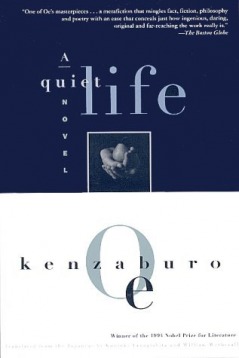
As some of you may know, my best friend, Moriah, is teaching English in Japan. Her absence has left a hollow space in my heart, and I think of her almost everyday, admiring her strength and determination. In an effort to better understand her experience, I’ve been picking up novels from Japanese authors, and last week, I stumbled upon the great work of Kenzaburo Oe. A major figure in contemporary Japanese literature, Oe won the Nobel Prize in Literature in 1994 for creating, “an imagined world, where life and myth condense to form a disconcerting picture of the human predicament today”. Born in the 1930’s in a small village in Japan, Oe grew up under the tutelage of both his grandmother and mother, women, who believed in the power of art and the written word. In A Quiet Life the protagonist is female and feels close affinity to her mother, a far more approachable and nurturing parent. Oe’s childhood, his close relationships with females, and his connection with both rural and urban Japan provides his work with a scope that few novelists achieve. Over the course of forty-eight hours, I devoured A Quiet Life. This haunting novel is narrated by Ma-Chan, the twenty-year-old daughter of a famous novelist. Born into a family of both talent and madness, Ma-Chan falls into the role of dutiful daughter, helping her brilliant and flawed kin to navigate through the world. Her father leaves for America in order to overcome what the family terms, “a pinch”. Her father’s depression requires the support and presence of Ma-Chan’s mother, and Ma-Chan is left in Japan to care for the other genius in the family, her talented yet mentally handicapped brother. Becoming the head of the household, Ma-Chan narrates her family’s experience without the presence of her parents. Eeyore, her mentally handicapped brother, requires her utmost attention and support. His passion and talent for music composition elevates an otherwise pitiable character. Ma-Chan must move with her brother, step-by-step, and while clearly an exhausting task, Ma-Chan has no bitterness. Her other brother, an independent and largely ignored teenager, drifts in and out of the novel. Both siblings, in their normalcy, do not demand the attention or praise that their father and other brother bring forth. And this is what I enjoyed most about the novel: the careful distribution of care amongst groups of people, amongst families. There seems to be this unwritten code that determines what each member needs in order to survive, in order to thrive, and in A Quiet Life the reader is privy to an otherwise private contract. As is common in most cultures and societies, the burden of care falls on the women. Both Ma-Chan and her mother are the responsible parties keeping the male savants functioning, and one wonders what would have happened if the needs had been reversed, if it was the women with the emotional or mental imbalances. This novel is the simple telling of a triad of adult siblings surviving without the presence of their parents. Ma-Chan records their days in a diary fashion, focusing on what she deems most important, the conversations, the intellectual stimulations, the progress of Eeyore, and her fears for his well-being. As the novel unfolded, I connected with Ma-Chan. I understood the steady and aching toll of caring for one who cannot fully care for himself. But Oe does not let the reader leave with the belief that this sibling relationship was one-sided; Eeyore may be dependent on Ma-Chan for most everything, but as in all human relationships, even the weakest member can provide necessary, even vital support. Read this novel, if you can find it, or perhaps pursue another work by Oe and let me know your impressions. | MonetAs an aspiring baker and writer, I hope that my passion for reading and baking can inspire others to pursue two of my most favorite activities. ArchivesSeptember 2011 Categories |